

The Reggio Emilia approach is an educational philosophy that emphasises child-led learning, creativity, and hands-on exploration. Many parents in Singapore seek preschools that adopt this approach due to its focus on critical thinking, collaboration, and experiential learning. A Reggio Emilia preschool in Singapore differs from traditional early education models because it encourages children to be active in their learning process. This approach is gaining popularity among parents looking for holistic and inquiry-based education options, including those searching for a Northpoint preschool that supports their child’s natural curiosity.
1. Child-Centred Learning Environment
Unlike traditional preschools that follow a structured, teacher-led curriculum, a Reggio Emilia preschool in Singapore encourages child-led exploration. Educators observe children’s interests and guide learning experiences based on their curiosity. This approach allows children to develop problem-solving skills and confidence in their learning ability.
Children are encouraged to ask questions, explore in-depth topics, and collaborate with peers. The learning environment is flexible, adapting to children’s interests rather than following a rigid curriculum. Reggio Emilia preschools nurture independent thinkers eager to explore new ideas by allowing children to take ownership of their learning.
2. Teachers as Facilitators, Not Instructors
Teachers in a Reggio Emilia preschool in Singapore act as facilitators rather than direct instructors. Instead of delivering lessons in a lecture-style format, they observe, document, and guide children’s learning experiences. Their role is to ask thought-provoking questions, encourage discussion, and provide resources that allow children to explore subjects in-depth.
By adopting this approach, teachers help children develop problem-solving and critical thinking skills rather than simply memorising information. Learning becomes interactive, where children and teachers work together to investigate topics, conduct experiments, and reflect on their discoveries.
3. The Role of the Environment as a “Third Teacher”
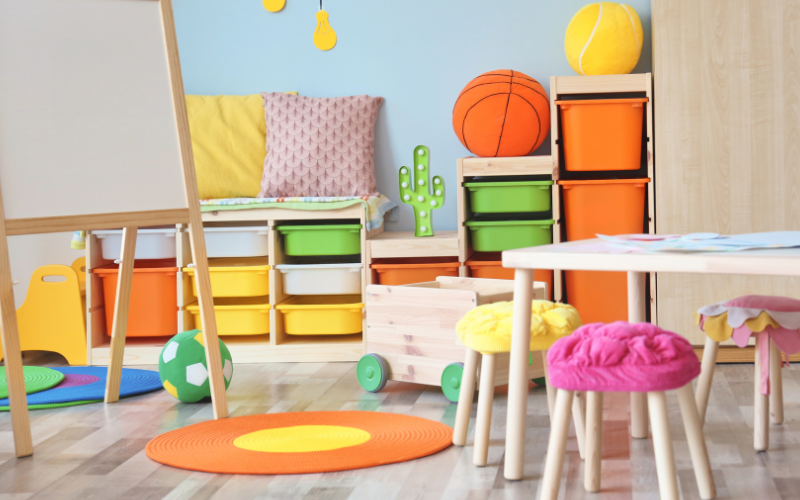
The classroom environment is crucial in Reggio Emilia in Singapore. Learning spaces are interactive, visually engaging, and stimulating. Classrooms are often filled with natural materials, open-ended resources, and documentation of children’s work to encourage exploration and self-expression.
Unlike traditional schools where learning is confined to structured classroom settings, Reggio Emilia classrooms are dynamic and adaptable. Children move freely between different areas, engaging in hands-on activities and encouraging creativity and collaboration. The environment supports learning, helping children make meaningful connections between concepts and experiences.
4. Emphasis on Expressive Arts and Creativity
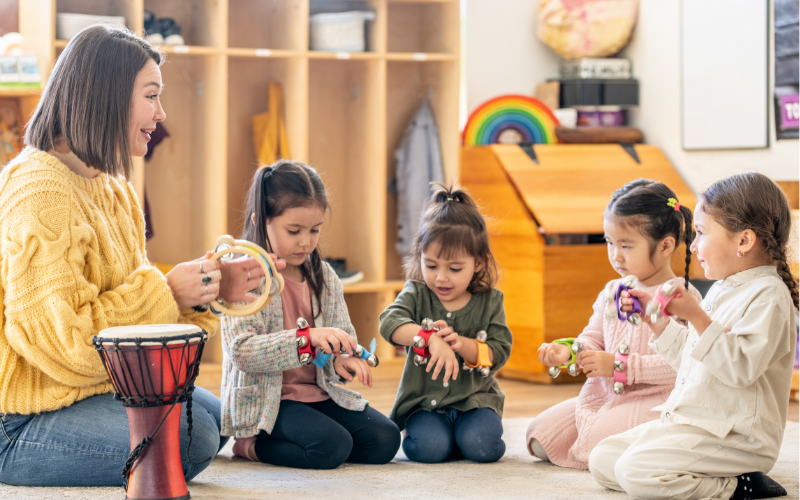
The Reggio Emilia philosophy recognises that children express themselves in many ways, often called “The Hundred Languages of Children”. This means that learning is not limited to traditional methods such as writing and speaking but also includes painting, sculpting, storytelling, music, and dramatic play.
A Reggio Emilia preschool encourages children to explore multiple forms of expression, helping them develop creativity and confidence. Art and creative activities are not separate subjects and are integrated into everyday learning, allowing children to make connections between concepts in different ways.
5. Strong Parental Involvement in Learning
Parents actively participate in their child’s education in a Reggio Emilia preschool in Singapore. Schools encourage regular parent-teacher communication, workshops, and participation in classroom activities. Parents are seen as partners in the learning process, providing insights into their child’s development and reinforcing learning at home.
This level of involvement strengthens the relationship between home and school, ensuring that children receive consistent support in their educational journey. Parents are encouraged to observe, engage, and contribute to their children’s learning experiences, making education a collaborative effort between teachers, children, and families.
6. Learning Through Projects and Inquiry-Based Exploration
Reggio Emilia preschools use a project-based learning approach, where children explore topics over extended periods. Rather than moving through a fixed curriculum, children engage in long-term investigations that allow them to ask questions, test ideas, and draw conclusions.
For example, a class may spend weeks studying nature, constructing models, or creating artwork to express their findings. These projects are documented through photographs, journals, and visual displays, helping children reflect on their learning journey. This process promotes deep understanding and engagement, making education meaningful and relevant.
Conclusion
A Reggio Emilia preschool in Singapore differs from traditional early education models by encouraging child-led learning, creativity, and collaboration. With emphasis on exploration, project-based learning, and expressive arts, this approach nurtures independent thinkers and confident learners. Parents looking for a Northpoint preschool or Reggio Emilia learning environment can expect a holistic, inquiry-driven education that prepares children for lifelong learning.
Contact Apple Tree Playhouse to learn more about our Reggio Emilia-inspired programmes.